
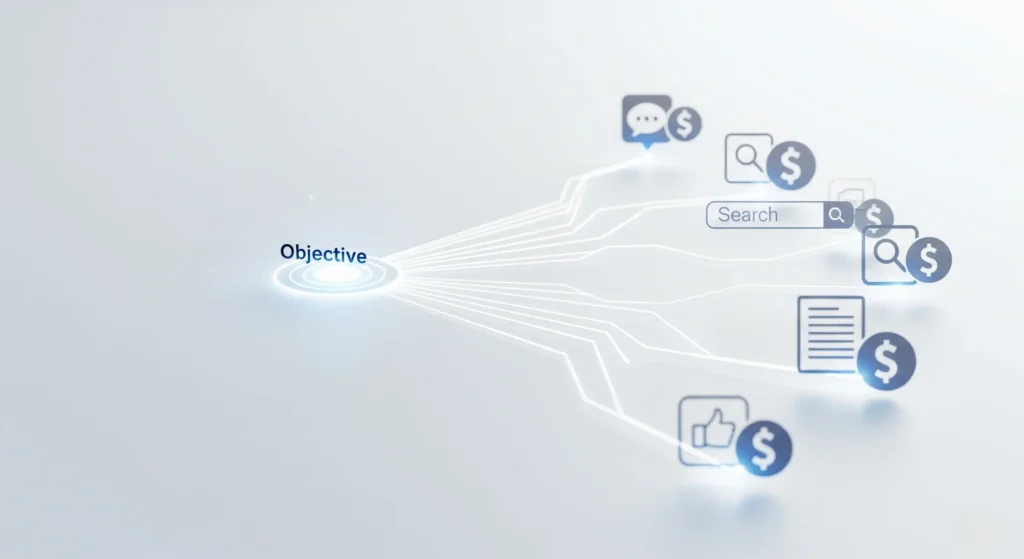
Let’s talk about how most marketing budgets are made. We take last year’s number, add a few percentage points for inflation or ambition, shuffle some money between channels that feel hot, and call it a day. It’s a process built on inertia, not intention. We justify spending because “it’s what we’ve always done.” Honestly, it’s one of the laziest and most dangerous habits in modern business.
This incremental approach is precisely why so many marketing departments struggle to prove their value. They’re funding activities, not outcomes. The antidote is a radical but incredibly effective framework: Zero-Based Budgeting (ZBB).
What is Zero-Based Budgeting (ZBB) and how does it differ from traditional budgeting?
Zero-Based Budgeting is a method that requires all expenses to be justified for each new period. You start from a “zero base”—a blank slate—and every single dollar requested for the upcoming budget must be fought for and tied directly to a specific, measurable business objective. Traditional budgeting, by contrast, takes the previous period’s budget as a baseline and only requires justification for incremental increases.
Think of it like this: traditional budgeting asks, “What did we spend last year, and what should we change?” ZBB asks a much harder, more powerful question: “Looking at our goals for this year, what is the absolute best way to deploy every single dollar to achieve them?” This forces a ruthless prioritization that is often absent from legacy planning. It’s not about cutting costs for the sake of it; it’s about reallocating resources from low-impact, legacy activities to high-growth, strategic initiatives. While it gained fame in corporate finance circles, its principles are perfectly suited for building a modern, agile marketing organization.
How does a marketing team actually implement ZBB without getting lost in the weeds?
Implementing ZBB can seem daunting, but it boils down to a clear, three-step process. It requires a shift from defending past expenses to pitching future investments.
- Define Your Core Objectives (The “Jobs to Be Done” for Your Budget): Before you can allocate a single dollar, you must have absolute clarity on your goals for the period. These shouldn’t be vague marketing goals like “increase brand awareness.” They must be concrete business outcomes. For example:
- “Generate $2M in new sales pipeline from the enterprise segment.”
- “Reduce customer churn by 15% in the next six months.”
- “Successfully launch Product X and acquire 1,000 new trial users.” Each of these objectives becomes a “decision package” that marketing activities will be funded to support.
- Identify and Justify Every Activity: For each objective, you build a case for the marketing activities required to achieve it. This is where the real work happens. You can’t just say, “We need $50,000 for social media.” You have to break it down:
- Objective: Generate $2M in new sales pipeline.
- Proposed Activity: A targeted LinkedIn ad campaign for enterprise decision-makers.
- Justification: “Based on last quarter’s performance data, our LinkedIn campaigns generated leads with a 10% MQL-to-pipeline conversion rate at an average CPL of $150. To generate the required pipeline, we project we’ll need X leads, requiring an ad spend of Y and Z hours from our marketing manager.” Every line item, from ad spend and software licenses to salaries and agency fees, must be tied back to a specific objective with a data-informed hypothesis.
- Rank, Fund, and Measure: Once all the “decision packages” are submitted, leadership ranks them based on their projected ROI and alignment with overall business strategy. The highest-ranked initiatives get funded until the budget is depleted. This creates a competitive environment where only the strongest, most well-justified ideas survive. Crucially, once funded, you must relentlessly track the performance of these initiatives against the projections you made. This data then becomes the foundation for the next ZBB cycle, creating a continuous loop of learning and optimization.
What are the real-world benefits of adopting ZBB in marketing?
The initial effort is significant, but the payoff is immense and transformative.
- Eliminates “Sacred Cow” Spending: It forces you to question those legacy budget items that have existed for years without anyone really knowing if they still work. That expensive trade show? That print ad subscription? If it can’t be justified against this year’s goals, it’s gone.
- Fosters Innovation and Agility: ZBB encourages your team to think like founders. By starting from scratch, they’re free to propose new, creative ideas that might have been overlooked in a traditional process. It forces them to stay current on which channels are actually delivering value today, not last year.
- Creates Unbreakable Alignment with Finance: When the marketing team starts speaking the language of ROI, objectives, and justified investments, the conversation with the CFO changes completely. You move from being seen as a cost center to a critical growth engine. This alignment is invaluable for securing the resources you need to succeed. According to research from firms like McKinsey, companies that master resource allocation generate significantly higher shareholder returns.
Zero-Based Budgeting is more than a financial exercise; it’s a cultural shift. It installs a discipline of accountability, performance, and strategic clarity that is essential for any business serious about growth in today’s market. It forces you to stop funding the past and start investing in the future.
Tired of defending a marketing budget built on last year’s assumptions?
It’s time for a smarter approach. At Buzz Hypnotica, we help businesses implement frameworks like Zero-Based Budgeting to build high-performance marketing machines that are directly tied to financial results. Let’s build a budget that your CFO will love. Contact us today.
