
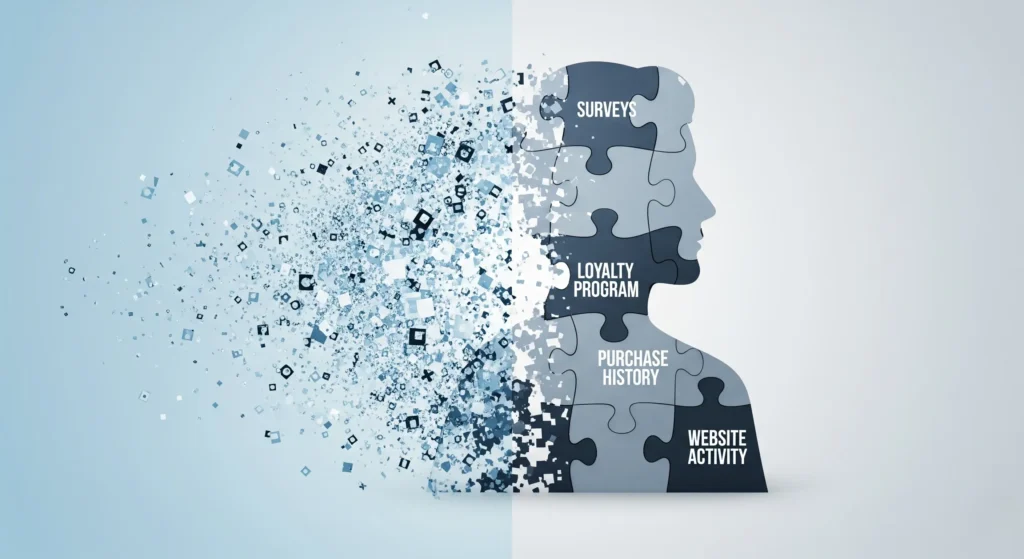
Let’s be blunt: the old way of doing business is dying. For decades, marketing has been built on a foundation of borrowed dirt—third-party cookies. We’ve chased anonymous users across the internet, built audiences on data we never truly owned, and accepted fuzzy attribution as the cost of doing business. But since Google started its phased deprecation of third-party cookies in 2024, that borrowed land is being taken back. The smart money is no longer trying to find a workaround; it’s building a new, more sustainable foundation on something they own: first-party data. This isn’t just a technical shift; it’s a strategic one that will separate the businesses that thrive from the ones that merely survive.
What is first-party data and why is it so critical now?
First-party data is information that a company collects directly from its customers and audience. This includes everything from a customer’s name and email address to their purchase history, website behavior, and what they’ve told you in a survey. It’s information you own, control, and can trust implicitly. The reason it’s critical now is that it’s the only reliable, future-proof way to understand your customer. Without third-party cookies, the ability to retarget, personalize ads at scale, and track cross-site behavior is significantly diminished. The brands that are winning are the ones that have shifted their focus from “acquiring new data” to “cultivating their own data.” Think about it like this: would you rather build your house on land you own, or on a lot you’re just renting? First-party data is your owned land.
How do you collect first-party and zero-party data in a way that doesn’t feel creepy?
This is where the art and science of marketing truly come together. The old approach was to grab data; the new approach is to earn it. The key is to offer value in exchange for the data. This is where zero-party data comes into play. Zero-party data is a specific subset of first-party data that customers intentionally and proactively share with you. This could be their preferences, interests, or what they’ve told you they want.
Here’s a breakdown of how to collect this data ethically and effectively:
- Create value-driven lead magnets. Go beyond a simple newsletter signup. Offer a personalized quiz that recommends products based on their answers. Give them an exclusive report or a template they can actually use in their business.
- Implement loyalty programs. A loyalty program is a goldmine for first-party data. By enrolling, customers are explicitly giving you permission to track their purchase history, allowing you to segment and personalize offers with incredible precision.
- Conduct post-purchase surveys and feedback forms. Don’t just ask for a star rating. Ask questions like, “What problem were you hoping to solve with this product?” or “What other products are you considering buying?” This gives you incredible insight into their jobs to be done.
- Build a preference center. Give customers control. Instead of an all-or-nothing email signup, let them choose what kind of emails they want to receive—monthly updates, weekly deals, or just product announcements. This builds trust and gives you valuable data on their interests.
Honestly, people are more willing to share their data than you think, especially when they know it will result in a better, more personalized experience. The trick is to be transparent about what you’re doing with it and to deliver on that promise.
Can a Customer Data Platform (CDP) really be a game-changer for my business?
Yes, absolutely. For any business that has more than one customer touchpoint—which is, let’s be real, every business—a Customer Data Platform (CDP) is becoming a non-negotiable part of the tech stack. Think of a CDP as the central brain for all your customer data. It pulls in first-party data from every source: your website, your CRM, your POS system, your email marketing platform, your mobile app, and even your offline interactions.
The magic of a CDP is that it unifies all this fragmented data into a single, comprehensive customer profile. It stitches together all the pieces of a user’s journey, so you no longer see a web visitor, a social media follower, and an email subscriber as three separate people. You see them as one individual with a complete history. This unified profile allows you to create highly segmented, deeply personalized campaigns across every channel, from email to paid advertising. It’s the difference between guessing what your customer wants and knowing it with a high degree of certainty. A recent study by Epsilon found that 80% of consumers are more likely to do business with a company that offers a personalized experience. A CDP is the engine that makes that level of personalization possible at scale.
How do I use my first-party data to create better marketing campaigns?
The beauty of first-party data is that it makes your marketing far more effective and efficient. Instead of broad, spray-and-pray campaigns, you can create hyper-targeted, relevant experiences. Here are a few ways to put your owned data to work:
- Hyper-Personalized Content: Use a customer’s past purchase history to recommend similar products. If they bought a camping tent, show them an ad for a sleeping bag. If they browsed your blog posts about SEO, send them an email with your latest insights on organic search strategy.
- Optimized Ad Targeting: While third-party cookies are dying, platforms still allow for first-party data uploads. You can upload lists of your existing customers to create lookalike audiences. These lookalike audiences are often your highest-performing ad segments because they’re built on the profile of people who already know and love your brand.
- Predictive Analytics: With enough first-party data, you can start to identify patterns. For example, you can predict which customers are most likely to churn based on their recent activity (or lack thereof) and proactively send them a re-engagement email with a special offer.
- Smarter Email Marketing: The days of a single weekly newsletter are over. Use your data to trigger automated email sequences. Send a birthday discount, a cart abandonment reminder, or a series of tips related to a product they just bought.
The fundamental shift here is from interruptive, generic marketing to helpful, relevant communication. The data you own is the single most valuable asset you have in this new marketing landscape. By focusing on collecting, unifying, and activating it, you’re not just adapting to a changing environment; you’re building a moat around your business that your competitors can’t easily cross.
Are you prepared to navigate the post-cookie world?
The marketing landscape is changing fast. Are you prepared to navigate the post-cookie world and leverage your most valuable asset—your first-party data—for sustainable growth? Contact Buzz Hypnotica today, and let us help you build a data strategy that doesn’t just survive but dominates.
